
Golfer's Elbow vs Tennis Elbow? Why Golfers Often Get the 'Wrong' One (and How to Fix It)


You grab your coffee mug and wince. You shake someone's hand and it zings. You pick up your driver and think, "Is this going to hurt today?"
Then you Google it and get two answers: golfer's elbow and tennis elbow.
Here's the funny part. You don't play tennis. And a lot of golfers with elbow pain? They actually have tennis elbow. It's like getting a parking ticket at a place you've never been.
Let's clear up which one you have, why you have it, and what actually makes it go away.
The Problem: Two Kinds of Elbow Pain, One Big Mix-Up
Both injuries are tendon problems. Tendons are the cords that attach your forearm muscles, that help move your wrist and fingers, to your elbow. When they get more stress than they can handle, they get cranky.
Golfers elbow vs tennis elbow: the big difference is where it hurts.
Golfer's elbow hurts on the inside of your elbow. That's the side closest to your body when your palm faces forward. It often hurts when you:
Grip something hard
Twist a jar lid
Bend your wrist toward your palm
Swing through impact
Tennis elbow hurts on the outside of your elbow. It often hurts when you:
Lift a coffee cup or a gallon of milk
Shake hands
Type or use a mouse
Carry your golf bag by the handle
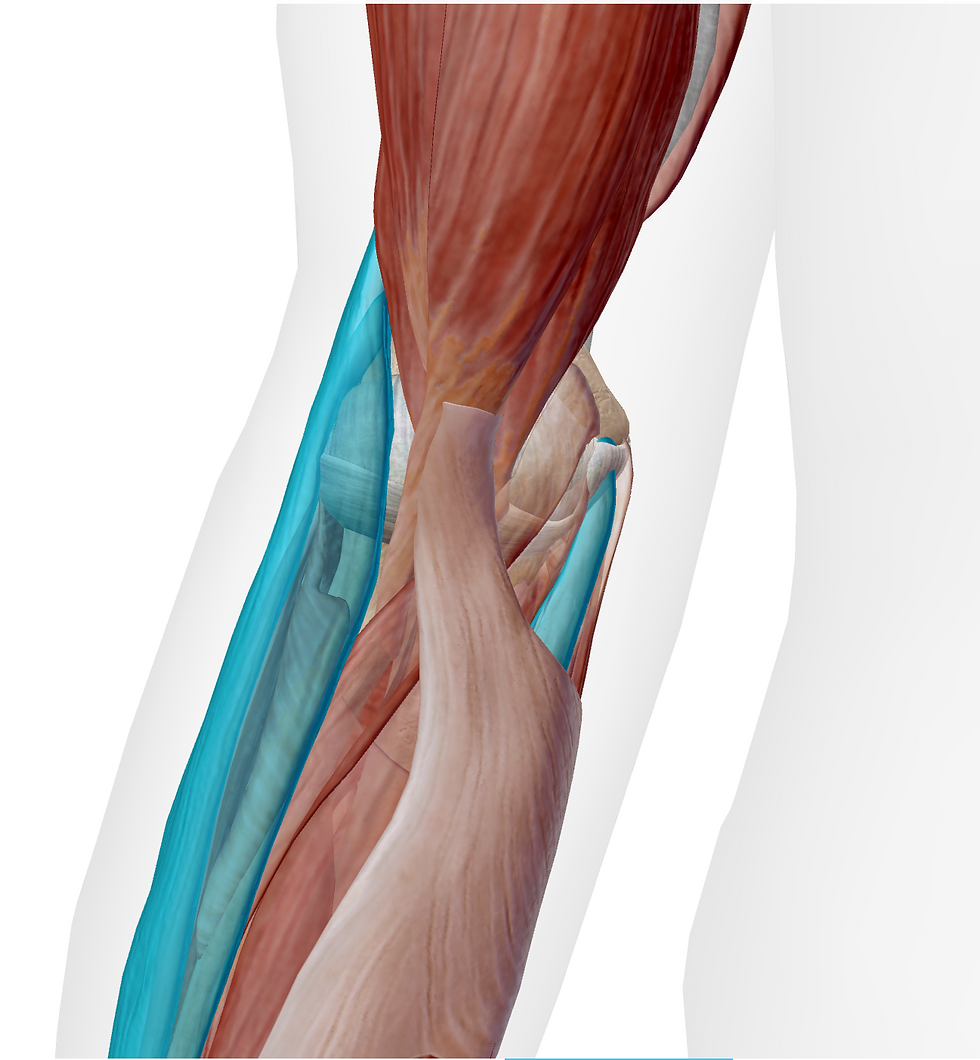
Here's a quick test. Shake hands with a partner and squeeze hard. While squeezing try and twist your palm down and then while maintaining the pressure try and twist your palm up. Pain on the outside of the elbow when twisting palm-up against resistance points to tennis elbow. Pain on the inside of the elbow when twisting palm-down points to golfer's elbow. (This isn't a diagnosis. It's a clue.)
Who gets Golfer's Elbow vs Tennis Elbow?
The names are kind of a lie. Most people with tennis elbow don't play tennis. And plenty of golfers get tennis elbow. Professional golfers tend to get golfer's elbow on their left arm and tennis elbow on their right arm (for a right-handed golfer). Amateurs are the complete opposite. They get golfer's elbow on their right arm and tennis elbow on their left arm (again for a right-handed golfer). This is because amateurs are often swinging their club inefficiently.
So if you're a golfer with outside elbow pain, you're not weird. You're normal. Annoyed, but normal.
Why it gets mistreated
Most people get the same advice for both:
Rest it.
Ice it.
Wear a strap from Amazon.
Maybe get a shot.
And sometimes that calms it down. Then you go back to golf, and three weeks later it's back. You've been here before, haven't you?
That's because rest treats the tendon. The shot treats the inflammation. It doesn't treat the reason the tendon got overloaded. Your elbow isn't the problem. Your elbow is simply the one yelling about the problem.
The Real Cause: Is It a Training Issue or a Physical Limitation?
At The Movement Clinic, we sort almost every injury into one of two buckets. This matters, because the fix for each one is totally different.
Bucket 1: A training issue
Your body can move well. But how you swing or practice is overloading your elbow. Common examples:
Hitting the ground first. Chunking the ball sends a jolt straight up your arms. Do it 80 times at the range and your tendons send you a bill.
Hitting off hard mats. Spokane winters push a lot of us onto indoor simulators and range mats. A fat shot into grass forgives you. A fat shot into a mat on concrete does not.
Death-grip syndrome. Squeezing the club like it owes you money keeps your forearm muscles tight the whole swing.
Too much, too fast. First warm week of spring, you hit three large buckets. Your elbow was not consulted.
New gear. New clubs, stiffer shafts, or a different grip size can change the load.
If this is you, the fix is mostly coaching and smarter practice. Not treatment.
Bucket 2: A physical limitation
Your swing isn't "wrong" because you don’t know what to do. Your body just can't move the way the swing needs it to. So something else picks up the slack. Very often, that's your arms.
Common examples:
Stiff upper back. If your mid-back can't turn, your arms have to do more of the work to make a full backswing.
Tight hips. If your lead hip can't rotate, your body stalls through impact. Your arms and wrists flip to square the club.
Weak grip or forearm strength. The tendons simply aren't strong enough for the load you're asking of them.
Limited wrist or shoulder motion. Something upstream is stuck, so the elbow compensates.
If this is you, a swing lesson won't fix it. You can't coach your way past a hip that doesn't rotate. Your golf pro will tell you "turn more," and you'll try, and it won't happen, and you'll both stare at each other.
Why this matters
Most people guess. They take lessons for a body problem, or they get treatment for a swing problem. Then they wonder why nothing sticks.
The goal is to stop guessing.
What We Do About It: Find the Driver, Then Fix That
This is where we're different from most clinics in Spokane.
Step 1: Our movement assessment. During our Movement Assessment we test how your joints and muscles actually move. Upper back rotation. Hip rotation. Shoulder and wrist range. Grip strength. We find the spots that are stuck, weak, or doing too much.
Step 2: Golf biomechanics testing. Through our Going Beyond Par program, we use motion-capture technology to measure your swing. Not just "it looks off." Real numbers. How much your hips turn. How much your upper body turns. When each part fires and in what order.
We're the only chiropractic clinic in Spokane using motion-capture biomechanics this way.
Step 3: Put the two together. When we compare your body to your swing, the answer usually jumps out. For example:
Your hips rotate fine on the table, but your swing doesn't use them? Training issue. You need coaching and practice changes.
Your hips don't rotate on the table or in your swing? Physical limitation. You need treatment and targeted exercises first.
Step 4: A plan built for you. Depending on what we find, that might include chiropractic care, soft-tissue work, tendon-loading exercises (tendons heal best with the right kind of work, not total rest), and you'll get a personalized training guide you can take to the range.

An honest note: Tendons heal slowly. We can't make that go faster than your body allows, and we won't promise you'll be pain-free by Saturday's tee time. Most people need several weeks of consistent work. But we can make sure those weeks are spent fixing the right thing, so you're not back here in three months.
Who This Is (and Isn't) For
This is for you if:
You're a golfer with inside or outside elbow pain
You've tried rest, ice, or a strap and it keeps coming back
You want to keep playing, not quit
You want to know why, not just treat the pain
This probably isn't for you if:
You just want a quick shot and you're not interested in the cause
Your pain came from a fall or a hard hit and you've got major swelling, numbness, constant pain at night, or can't straighten your arm.
A Real-World Example
Tammi, 49, plays twice a week at Kalispel. (Name changed.)
Tammi came in with pain on the outside of her left elbow. Classic tennis elbow. She'd rested it for a month, worn a strap, and even gotten a shot. Every time she went back to golf, it came back.
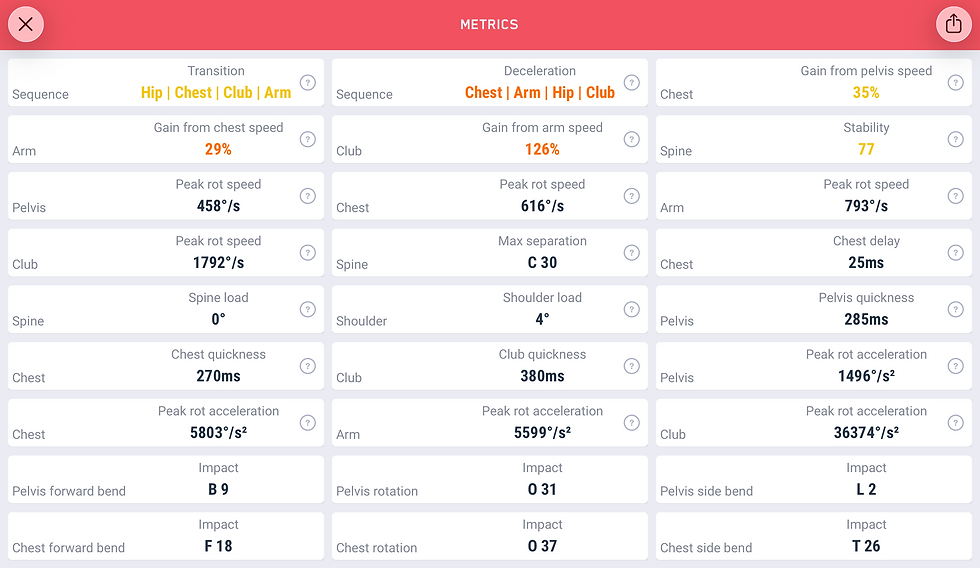
Her movement assessment showed a stiff upper back and difficulty rotating her hips. Video analysis showed that her hips moved toward the ball during the downswing, crowding the space her arms needed. This changed the proper firing pattern of her body and her motion-capture results during her biomechanics assessment matched: the motion sensors picked up an abnormally high speed gain between her arm and club. Speed gain represents how much faster the club moves than the arm. It clocked in at 126% speed gain instead of a normal 100%. This suggested that the elbow and wrist were working harder than expected to keep the club going.
Her elbow wasn't weak. It was overworked, doing the job other parts of her body couldn't because they were too tight and too out of order.
So we didn't just treat the elbow. We worked on her upper-back and hip mobility, we built up her forearm tendons with specific loading exercises, and gave her a training guide with drills to help change her firing sequence.
About eight weeks later, Tammi was playing pain-free. Bonus: she picked up some distance off the tee, because it turns out a body that turns better hits the ball farther. She was not upset about this.
Your Next Step: Get a Movement Assessment
Not sure yet if your elbow pain is a training issue or a physical limitation? If you're in the Spokane area start here, because the right fix depends on getting the right answer.
Here's what happens when you click:
You put your information in and find a time that works for you to get a Movement Assessment
Our staff contacts you with a cost estimate
You get assessed by one of our sports chiropractors first and they will order the golf biomechanics testing
You understand what is wrong and what you need to do about it
That way, you don't spend another month resting and hoping.


Comments